No products in the basket.
















Seven iconic FIFA World Cup balls that made history

From the stitched leather of 1930 to today’s AI-designed marvels, FIFA World Cup balls have evolved with the sport itself — blending innovation, design, and culture to define each football era.
Here are seven of the most iconic match balls that shaped World Cup history:
1. Tiento & T-Model (1930)
The first World Cup in Uruguay had no official match ball. In the final, Argentina’s lighter Tiento was used in the first half, while Uruguay’s heavier T-Model replaced it in the second — a switch that helped Uruguay rally to a 4–2 victory. This moment set the tone for decades of innovation to come.
2. Adidas Telstar (1970)
Introduced for Mexico 1970, the Telstar changed everything. Its 32 black-and-white panels improved visibility on television and made it an instant classic. It also marked the beginning of Adidas’ enduring partnership with FIFA — and became the template for all modern footballs.
3. Adidas Tango España (1982)
An evolution of the 1978 Tango, the Tango España debuted in Spain and was the last fully leather ball used at a World Cup. Its waterproof coating and symmetrical design set new standards for durability, paving the way for the synthetic materials that followed.
4. Adidas Tricolore (1998)
For France 1998, the Tricolore became the first multi-colored World Cup ball. Its blue, white, and red graphics celebrated French national pride while introducing synthetic foam layers for improved touch and responsiveness. It was a visual and technical breakthrough for its time.
5. Adidas Jabulani (2010)
Launched in South Africa, the Jabulani was engineered with only eight thermally bonded panels and marketed as the “roundest ball ever.” While its unpredictable flight drew goalkeeper complaints, it remains one of the most memorable — and debated — balls in World Cup history.
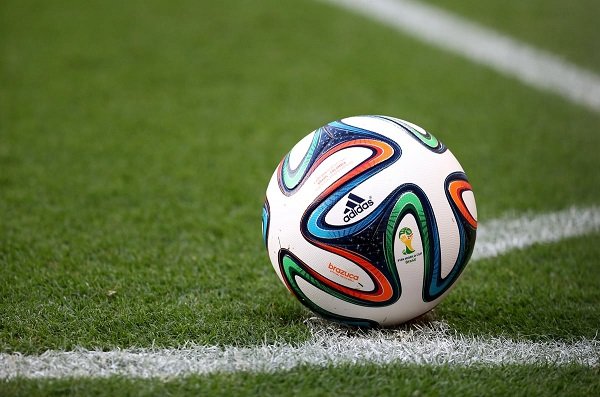
6. Adidas Brazuca (2014)
After the Jabulani controversy, Adidas redeemed itself with the Brazuca, tested by over 600 players worldwide. Its carnival-inspired design captured Brazil’s festive spirit, while its stable aerodynamics earned universal praise from players and fans alike.
7. Adidas Al Rihla (2022)
Meaning “The Journey” in Arabic, the Al Rihla symbolized innovation at Qatar 2022. It became the first World Cup ball designed with data-tracking technology, allowing referees and VAR to monitor every touch in real time — a landmark in football’s digital evolution.